
Activated Carbon Powder Sponge
Subcategory:
Model:
Brand:
FRESH
Activated Carbon Powder Sponge
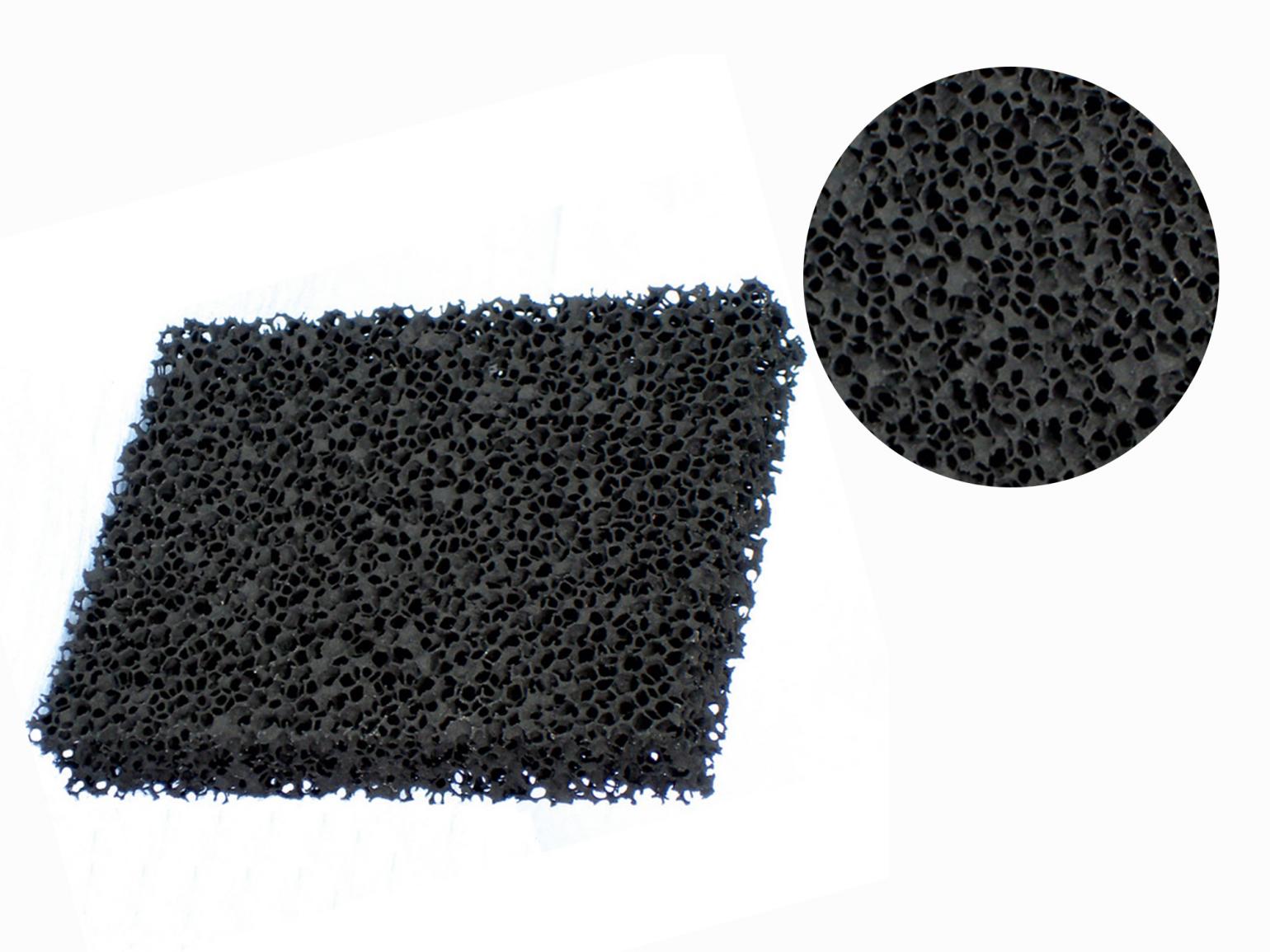
Application: various ventilation systems, air purification and air conditioning systems
1.Air conditioning and ventilation systems dust removal and deodorization
2.All kinds of organic exhaust filter purification
3.Formaldehyde toluene hazardous gas adsorption
4.Home and commercial air purifiers, oil fume purification, painting, industrial and other waste gas emission purification
5.Available to supply in cut pad, rolls or as inner material for filter
Features:
1.Good adsorption and air permeability performance, can be tailored to any dimension, good strength and low airflow velocity resistance.
2.Resistance to general chemical liquid even weak acid/alkaline, avoid direct and long term sun radiation.
Technology Parameters | |||
Main material | Polyurethane foam + powdered activated carbon | Temperature resistance | ≤100℃ |
Aperture range | 10~60PPI | Instantaneous temperature resistance | ≤120℃ |
Filtration grade | G3~ G4 (EN779) | Humidity resistance | ≤ 8 0%RH |
Adsorption Objects | Various organic gases | Flammability rating | B1、 B2(GB/T 17591-2006) |
Final resistance | 200Pa ( Suggestion ) | ||
Technical parameters
Model | Normal Size | Carbon content | Benzene adsorption | Recommended adsorption airflow speed m/s | ||
L (m) | W (m) | T (mm) | ||||
FRS-ACPS | 2 | 1 | 3~200 | ≥50% | ≥25% | <0.5 |
Note: Other specifications are available upon request. | ||||||
Activated carbon air filters are an essential component in modern air purification systems, designed to remove odors, gases, and volatile organic compounds (VOCs) from the air. Unlike traditional particulate filters that trap dust, pollen, and other solid particles, activated carbon filters use the porous structure of activated carbon to adsorb chemical pollutants. The high surface area of activated carbon allows it to effectively capture airborne molecules, making it ideal for homes, offices, industrial settings, and vehicles.
These filters are commonly used in HVAC systems, air purifiers, and range hoods to enhance indoor air quality. The activated carbon works through a process called adsorption, where pollutants adhere to the carbon surface, neutralizing harmful substances such as smoke, cooking odors, paint fumes, and chemical vapors. Some activated carbon filters are impregnated with additional substances like potassium permanganate to further increase their ability to remove specific gases.
Maintenance and replacement of activated carbon air filters are crucial to ensure their efficiency. Over time, the pores become saturated, reducing the filter’s effectiveness, which is why periodic replacement is recommended according to manufacturer guidelines. With increasing awareness of indoor air pollution and health concerns, activated carbon air filters have become a popular solution for creating cleaner, fresher, and safer indoor environments.
PRODUCTS
CONTACT
D4 Fenggong Area Nansha Village Danzao Town Nanhai District , Foshan City, Guangdong PR. China.
Activated Carbon Powder Sponge
Application: various ventilation systems, air purification and air conditioning systems
1.Air conditioning and ventilation systems dust removal and deodorization
2.All kinds of organic exhaust filter purification
3.Formaldehyde toluene hazardous gas adsorption
4.Home and commercial air purifiers, oil fume purification, painting, industrial and other waste gas emission purification
5.Available to supply in cut pad, rolls or as inner material for filter
Features:
1.Good adsorption and air permeability performance, can be tailored to any dimension, good strength and low airflow velocity resistance.
2.Resistance to general chemical liquid even weak acid/alkaline, avoid direct and long term sun radiation.
Technology Parameters | |||
Main material | Polyurethane foam + powdered activated carbon | Temperature resistance | ≤100℃ |
Aperture range | 10~60PPI | Instantaneous temperature resistance | ≤120℃ |
Filtration grade | G3~ G4 (EN779) | Humidity resistance | ≤ 8 0%RH |
Adsorption Objects | Various organic gases | Flammability rating | B1、 B2(GB/T 17591-2006) |
Final resistance | 200Pa ( Suggestion ) | ||
Technical parameters
Model | Normal Size | Carbon content | Benzene adsorption | Recommended adsorption airflow speed m/s | ||
L (m) | W (m) | T (mm) | ||||
FRS-ACPS | 2 | 1 | 3~200 | ≥50% | ≥25% | <0.5 |
Note: Other specifications are available upon request. | ||||||
Activated carbon air filters are an essential component in modern air purification systems, designed to remove odors, gases, and volatile organic compounds (VOCs) from the air. Unlike traditional particulate filters that trap dust, pollen, and other solid particles, activated carbon filters use the porous structure of activated carbon to adsorb chemical pollutants. The high surface area of activated carbon allows it to effectively capture airborne molecules, making it ideal for homes, offices, industrial settings, and vehicles.
These filters are commonly used in HVAC systems, air purifiers, and range hoods to enhance indoor air quality. The activated carbon works through a process called adsorption, where pollutants adhere to the carbon surface, neutralizing harmful substances such as smoke, cooking odors, paint fumes, and chemical vapors. Some activated carbon filters are impregnated with additional substances like potassium permanganate to further increase their ability to remove specific gases.
Maintenance and replacement of activated carbon air filters are crucial to ensure their efficiency. Over time, the pores become saturated, reducing the filter’s effectiveness, which is why periodic replacement is recommended according to manufacturer guidelines. With increasing awareness of indoor air pollution and health concerns, activated carbon air filters have become a popular solution for creating cleaner, fresher, and safer indoor environments.
Leave A Message
If you are interested in our products and want to know more details,please leave a message here,we will reply you as soon as we can.


Guangdong Fresh Filter Co.,Ltd is a high-tech enterprise specializing in air filters product R&D, manufacturing and sales.


SAF Coolest v1.3.1.1 设置面板 GXISD-ZBPM-HXSAE-ZAW
无数据提示
Sorry,There Is Currently No Content In The Current Column!
You can view other columns or return to Home